Horse racing is the rare gambling product that rewards genuine knowledge — form, conditions, pace, the jockey — while still running on a house margin you can measure. The trick is knowing where that margin lives: it is called the takeout, it comes out of the pool before anyone is paid, and it climbs sharply on the exotic bets that feel most exciting. This guide makes the numbers legible. For the full set of games, see the Game Guides index.
You are not betting against the house the way you are in a casino — you are betting into a pool against other bettors, and the house takes its cut before anyone gets paid. That cut is the takeout, and it typically runs 15% to 25% depending on the bet. Simple bets (win, place, show) give back the most. Exotic bets cost the most.
How the game works
Most racing markets run on one of two systems — or a mix of both. Knowing which one you are betting into tells you when your odds are locked and where the margin sits.
Pari-mutuel (tote)
All bets go into a shared pool. The track takes its percentage — the takeout — off the top, and the rest is split among the winners. Odds are not final until all bets are in: heavy betting on a horse pushes its payout down, and a lightly backed winner pays more. The numbers on the board before the race are estimates, settled at post time.
Fixed-odds
The bookmaker sets odds on each horse, and you lock them in when you bet. Your payout is decided the moment you place the wager, no matter how the market moves afterward. The bookmaker's margin is built into the prices they offer — set so they hold an edge across all outcomes.
And here is how a single race plays out, from card to result.
- Check the race cardIt lists every horse, their jockey, trainer, weight carried, recent form, and the morning line — the preliminary odds estimate.
- Place your betChoose a bet type (win, place, exacta, and so on), pick your horse or horses, and set your wager amount.
- The horses runThe outcome turns on a complex mix of horse ability, jockey skill, track conditions, distance, pace, positioning — and plain luck.
- Results go officialOnce stewards confirm the finishing order and clear any fouls or objections, winning bets are paid.
Bet types: simple to exotic
Watch the takeout column as the bets get fancier. There is a consistent pattern: the more complex the bet, the bigger the cut taken before you are paid.
Straight bets
| Bet | What it means | Typical minimum | Takeout range |
|---|---|---|---|
| Win | Your horse finishes first | $2 | 15–18% |
| Place | Your horse finishes first or second | $2 | 15–18% |
| Show | Your horse finishes first, second, or third | $2 | 15–18% |
| Each-way (UK / intl.) | Two bets in one — a win bet and a place bet on the same horse | 2× your unit stake | Varies by bookmaker |
| Across the board | Three bets: win, place, and show on the same horse | $6 ($2 each) | 15–18% per pool |
Exotic and multi-race bets
| Bet | What it means | Typical minimum | Takeout range |
|---|---|---|---|
| Exacta (forecast) | Pick the top two finishers in exact order | $1–$2 | 20–25% |
| Trifecta (tricast) | Pick the top three finishers in exact order | $0.50–$1 | 20–25% |
| Superfecta | Pick the top four finishers in exact order | $0.10–$1 | 20–25% |
| Quinella (reverse forecast) | Pick the top two finishers in any order | $1–$2 | 20–25% |
Multi-race bets follow the same curve: a daily double links two consecutive races, a Pick 3 or Pick 4 links three or four, and a Pick 6 links six — with takeouts of 20–30%, often at the high end. An accumulator (parlay) ties selections across races into one bet where every leg must win, and the effective margin compounds with each leg — the same math covered in the Sports Betting guide.
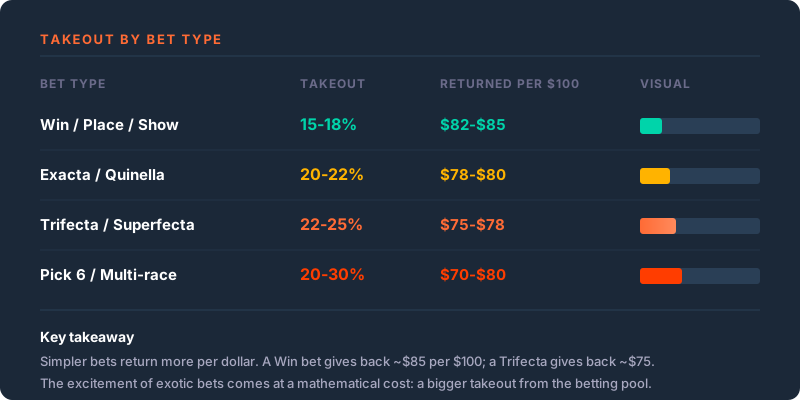
The pattern is the lesson. Simple bets — win, place, show — carry the lowest takeout, typically 15–18%. Exotic and multi-race bets run 20–25% or more. The bigger the potential payout, the bigger the cut before anyone collects.
The math: takeout and the pool
The takeout is the track's (or bookmaker's) cut. In pari-mutuel betting it comes out of the pool before winnings are distributed; in fixed-odds betting it is built into the prices. Either way, it is a percentage of every dollar wagered, applied before any winnings are calculated.
| Bet type | Typical takeout | Left for bettors |
|---|---|---|
| Win / Place / Show | 15–18% | 82–85% |
| Exacta / Quinella | 20–22% | 78–80% |
| Trifecta / Superfecta | 22–25% | 75–78% |
| Pick 6 / multi-race | 20–30% | 70–80% |
How pari-mutuel odds work
Because the pool sets the price, the less popular a winning horse is, the more it pays. Here is a simplified $1,000 pool with a 20% takeout, leaving $800 to share among winners.
| Horse | Total bet on this horse | Share of pool |
|---|---|---|
| Horse A | $500 | 50% |
| Horse B | $300 | 30% |
| Horse C | $200 | 20% |
| Total pool | $1,000 | — |
If Horse C wins, that $800 payout pool divided by the $200 bet on it returns $4 for every $1 — a 3-to-1 payout (your dollar back, plus three in profit). If the favorite Horse A wins, $800 divided by $500 returns just $1.60 per dollar, because more money was riding on it. Longshots pay more precisely because they are less likely to win — popularity usually tracks genuine probability.
Key terms
- Takeout (track take)
- The percentage removed from the betting pool before winnings are distributed. The house’s cut.
- Pari-mutuel (tote)
- A system where all wagers go into one pool. The track takes its cut and the rest is divided among winners. Odds are final at post time.
- Fixed-odds
- Odds locked in the moment you place your bet. Your payout does not change regardless of later market movement.
- Form guide
- A record of each horse’s recent racing history — finishes, times, conditions, distances, jockeys. Informative, not predictive.
- Morning line
- Preliminary odds set by the track handicapper before betting starts. An estimate, not a guarantee — actual odds shift as bets come in.
- Post time
- The scheduled start of the race. In pari-mutuel betting, final odds are set at post time.
- Accumulator (parlay)
- A single bet linking selections across races. All must win. Payouts grow with each leg, but so does the effective margin.
- Going (track condition)
- The state of the surface — firm, good, soft, heavy on turf; fast, good, muddy, sloppy on dirt. Affects different horses differently.
- Stewards
- Officials who oversee the race, rule on fouls, and confirm the final result.
Tips for informed play
Racing rewards homework more than most gambling — but the takeout is always the silent partner in every bet.
- Favor simple bets for a better return. Win and place bets carry 15–18% takeout; trifectas and Pick 6s run 20–30%. Over time, that lower cut on simple bets makes a real difference.
- Read form as context, not prophecy. Past performance tells you about a horse's ability under certain conditions — but surface, distance, field size, pace, and weather all change. Useful data point, not a guarantee.
- Know that exotic bets carry the worst odds. Trifectas, superfectas, and Pick 6s feel exciting because the payouts are large. But the track takes 20–25% or more off the top first. Bigger payout, bigger cut.
- Treat tips as entertainment, not advice. Tipsters and touts sell opinions, not certainties. Anyone who could reliably pick winners would bet, not sell. "Track records" lean hard on survivorship bias.
- Set a session budget before the first race. A card can run 8–12 races. At $2–$10 per bet across a full card, a day at the track can cost $50–$150 in wagers alone. Decide your total before the gates open, not after the fifth.
Common myths
Three of the most common racing misconceptions, and what the numbers actually say. For the broader approach to correcting these in player-facing copy, see Myth-Busting.
Myth
Tipsters have consistent accuracy
Survivorship bias at work — you hear about the wins, not the misses. If anyone could reliably pick winners, they would be betting, not selling tips. Track-record claims rarely survive a full season of scrutiny.
Myth
"Sure things" exist in racing
No outcome in horse racing is certain — that is precisely why there are odds. A strong favorite reduces uncertainty; it never removes it. The shorter the price, the smaller the payout for taking that "sure thing."
Myth
Past form guarantees future results
Form is real information, but it is context, not prophecy. Every race brings a different surface, distance, field, pace, and weather. A horse that won its last three has shown ability — not booked a fourth win.
Skill genuinely matters in racing — but so does the takeout, and it never takes a day off. Pick the bet types that return the most, treat the form guide as a starting point rather than a finish line, and set your budget before the first gate opens. If betting ever stops being fun, the National Council on Problem Gambling offers free, confidential support.